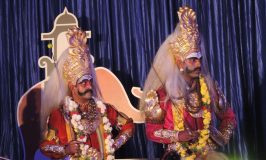
Veeragase is a folk dance of Karnataka where the participants wear grand makeup, headgear, and costumes and dance to folk music composed on Hindu mythology. The dance movements are intense with … [Read more...]
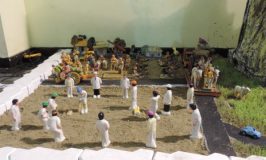
Dasara Gombe – Dolls Arrangement 2023
The best part of Navratri / Dushehra / Dasara celebrations in Mysuru was visiting neighbour's homes for the Gombe Arathi (doll arrangement / Golu) and enjoying the traditional and delicious sweets and … [Read more...]
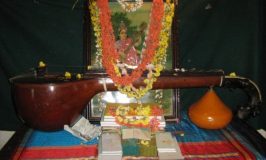
Saraswathi Prarthane – Prayer to Goddess Saraswathi
Today is Saraswathi Pooja, which is part of Navrathri celebrations. This is a prarthane (prayer) to Goddess Saraswathi written by my grandfather Sri M.M.Patil in 1969. ಸರಸ್ವತಿ … [Read more...]
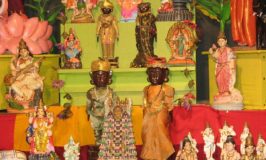
Gombe Arathi Haadu – Dolls Arathi Song – Golu Song – Dolls Arrangement Song
In Mysore, during Dasara festival, there is a tradition of arranging dolls on 7 steps or 9 steps. Various dolls passed on from generations are removed from boxes, dusted, and arranged according to … [Read more...]
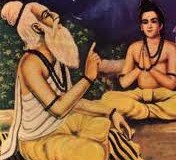
King Raghu and Vijayadashami – Importance of Banni Tree – English Version
King Raghu of Raghuvamsha fame was a brave, generous, humble, and sensible ruler of Ayodhya. He had won many battles and his treasury was filled to the brim. On the behest of his guru Vashishta, he … [Read more...]
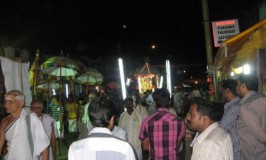
Goddess Sharadamba Utsava
Happy Saraswathi Pooja 2014. In Sringeri, Karnataka, during Dasara festival, the utsava murthy (procession idol) of Goddess Sharadamba (Saraswathi) is taken in a small chariot around the temple … [Read more...]
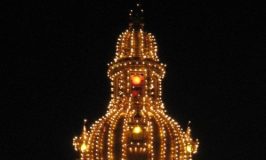
Mysore State Anthem
The existence of Mysore State Anthem was bought to my notice by my dad, who during his primary school days would sing the anthem every day. In 1881, the British decided to give back the state … [Read more...]
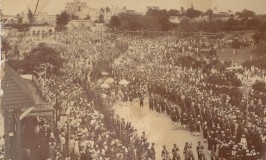
Mysore Dasara Procession in Black and White
Wish you all a very happy Dasara! This Dasara procession photograph was part of my grandfather's collection. The photograph was probably taken between 1930 - 1935. … [Read more...]
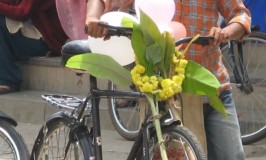
Ayudha Puja
Ayudha Pooja is a celebration during Dasara. On this day the weapons used during war were worshiped in the palace. The common people worship machines, implements and vehicles at home, factories and … [Read more...]
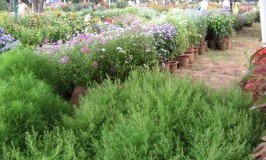
Mysore Dasara Flower Show
Mysoreans love gardening and every house will have at least a Tulasi and Money plant growing in a pot. To encourage this wonderful hobby, a flower show on a grand scale is held by the … [Read more...]
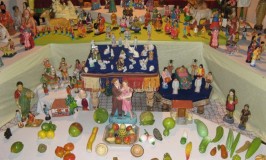
Navaratri Golu – Dolls Arrangement during Dasara
This is in continuation of the post “Traditional Dolls Arrangement”. The custom of arranging dolls during Navaratri / Dasara is also followed in Tamil Nadu, Kerala and Andhra Pradesh. In these states … [Read more...]
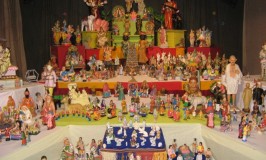
Traditional Dolls Arrangement
Here are some Dolls that are handed over from generations to generations for arranging during Dasara. Traditional Dolls Arrangement includes Dolls in a marriage party complete with the bride / groom … [Read more...]
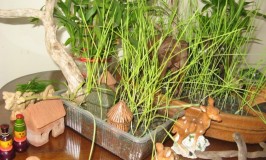
Gombe Habba – Forest Arrangement
During Dasara, many households had the ritual of arranging dolls in the house for 9 days in Mysore region. This would bring out a lot of creativeness among the people. The … [Read more...]
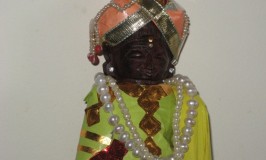
Pattada Gombe Alankara
Pattada Gombe in Kannada means, the royal dolls and Alankara means decoration. Many households have a custom of arranging dolls during Dasara festival in Mysore and distribute sweet and savories to … [Read more...]
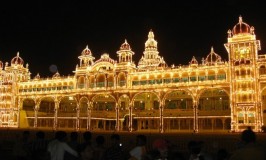
Dasara Procession and Torch Light Parade during the reign of the Wodeyars
Picture1 - Illuminated Mysore Palace Mysore Dasara procession during the Maharajah’s rule used to be on a larger scale and grander. My grandparents and parents generation go on and on … [Read more...]
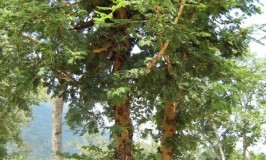
Banni Tree
The botanical name of this tree is Prosopis spicigera. In Sanskrit it is known as Shami Vruksha. Banni tree is found in dry and arid regions at low altitudes. This tree is widely grown in … [Read more...]
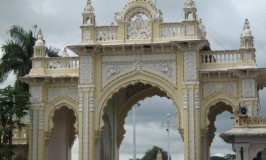
Dasara Procession in Mysore
Vijayadashami being the last day of the celebrations, a grand Jamboo Savari/procession passes through the streets of the city. The main attraction here is the idol of the goddess Chamundeshwari placed … [Read more...]
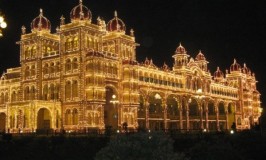
Mysore Dasara – Mysuru Dasara Celebrations – Mysuru Dussehra – Mysuru Navratri
Mysore looks its best during the 10-day Dasara celebration where all the major roads in the city, heritage buildings, palaces, historical monuments, ancient temples and shops are … [Read more...]
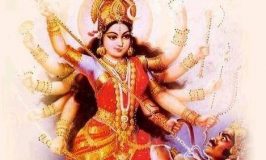
Dasara – Celebration of Dussehra in different regions of India – Navratri Celebrations
In Mysore, we always looked forward to Dasara, which is the Nada Habba (festival of Karnataka state) and it is not only celebrated in homes but the whole city seems to wake up from the slumber to 10 … [Read more...]

